How to Get a Better Lawn (Everything You Need to Know about Grass)
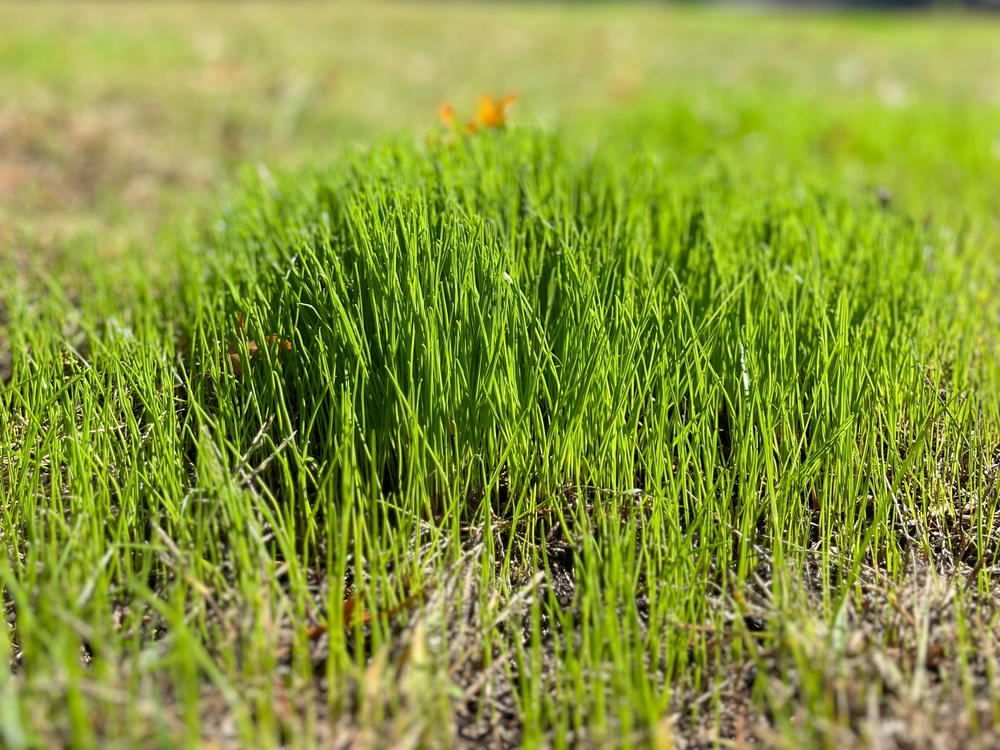
A healthier, greener lawn doesn’t have to be complicated. This step-by-step guide covers everything you need to know about grass and lawns!
Some links in this article may earn us a commission if you buy through them. As an Amazon Associate I earn from qualifying purchases. Read our privacy policy and learn more about us.
Table of contents
- What you’ll learn from this lawn patching guide
- Feeling overwhelmed? Use this quick start.
- Setting expectations: time, money, and problem spots
- How to prepare to start patching your lawn
- Best option for grass seed to patch a lawn
- Your compost and top soil for lawn patching
- Troubleshooting your lawn patching (common fixes)
- Different types of grass seed
Are the bare patches on your lawn staring you in the face? Are they pleading for help? Is your lawn terrible and you don’t know where to get started?
When we bought our house, we inherited the challenge of a patchy and spotty lawn. While typically it wouldn’t have bothered me so much, it took away from overall curb appeal.
If you’ve been looking at your lawn thinking, “How can I possibly fix this?” then this guide can help. I started patching my lawn from scratch, with a bunch of learning about grass seed types and went from there.
Use this guide of tips to fix your lawn as soon as today, even if you’ve never done anything like this before.
A quick note: This is general lawn advice, but it skews toward people with cool season grass (think Northeast, Midwest, Pacific Northwest). Basically places with real winters. If you live somewhere warm all the time, some of the timing and seed types will be different.
What you’ll learn from this lawn patching guide
- I provide a quick start guide to help you start as a first-timer (what to buy, how to know you got the right type of seed, how to water and let your grass survive)
- Learn about ideal grass seeding conditions like weather and moisture, and how to prep the area before seeding.
- I share the best grass seed mixture I use (it also contains fertilizer and mulch, so it’s a one-shop stop)
- I discuss top dressings like straw and compost, and how to do this.
- I end with a few troubleshooting considerations for in case your grass seed didn’t grow after a few weeks.
Feeling overwhelmed? Use this quick start.
Here’s the simplest step-by-step for you in your lawn patching journey. The rest of this guide will go in depth.
- What to get: Get Scotts EZ Seed for small areas. They make small sizes and bigger sizes.
- Use the right type: Make sure you’re using the right type of grass seed. Where I live (the Northeast), we need “cool season grass.” Make sure you’re getting the right sun/shade type for your exposure, too.
- Watering: You’ll need to water your lawn daily, either with forecasted rain or with a hose until the grass germinates. Then you can let off a little bit.
- Never let the seed dry out: You want to keep the top layer of soil moist. Water lightly and often. If the seed dries out, germination can fail. Don’t blast it either, or the seed will wash away.
- Find the root cause of the issues: Figure out why grass isn’t growing in the area you want to fix. There could be a rock that you need to dig out. You might have grubs (insect larvae that damage lawns). It could be a lot of things.
For small areas, you can easily fix your patchy lawn. Small areas are basically anything with the size of an 8x8’ area rug.
Setting expectations: time, money, and problem spots
If you’re patching and repairing your lawn incrementally (like I did), your lawn might take several years to really look “fixed.” That’s normal. Grass fills in slowly, and you’re usually fixing the same kinds of problems over and over until the underlying issue is gone.
Overseeding in spring and fall is a big part of that. Overseeding means spreading seed over your existing lawn (you’re not starting from bare dirt). For cool season grass, spring and early fall are the two best windows.
If your lawn is in rough shape, I’d overseed in both spring and fall until it thickens up. You get two chances per year to fill in thin spots and outcompete weeds. Weeds hate thick lawns. Weeds love thin and patchy lawns.
My approach: Focus on a few problem areas slowly. If you keep seeing bare patches in the same spot, don’t throw seed at it again. Address the actual problem first. Before you reseed, try:
- Aerating the area (especially if the soil feels hard or water runs off instead of soaking in)
- Adding compost or organic matter and raking it in lightly
- Digging a little to see if there’s something obvious (rocks, buried debris, super shallow soil)
When you’re fixing your lawn, you’re basically toggling between money and time. You can get a perfect lawn faster, but it’ll be expensive (sod, lots of topsoil, professional aeration, etc.). I found it more rewarding to make improvements incrementally and learn what my yard actually needed.
And one more thing: a “perfect” lawn is kind of boring for wildlife. We keep wild violets in parts of the yard because they’re great for pollinators.
I’ve also been leaving dandelions (bees and butterflies like them). You can dedicate small patches to native plants, clover and other “imperfect” lawn stuff without giving up on having a nice yard overall. It’ll still be green for you and better for the bugs!
How to prepare to start patching your lawn
I started patching my lawn with zero experience in doing this on my own. Here is how I started and how you can do it with a few handy products and some time set aside.
Prepping the area and your seed mixture
Before you do anything, grab a rake (for bigger areas), or a hand cultivator. You want to disturb the soil so the grass seed or mixture has good seed-to-soil contact. If you have dead grass or anything in the way, clear the area and remove it.
When you put down your seed mixture, you’ll need to water it daily until you see the grass germinate and start to come up. Or better yet, water it multiple times per day if time permits!
You want to avoid having people walking on the new grass. And if you have a lawn service, they should completely avoid the area that you seeded. The turning from the mower or the high-speed mowers could destroy the new little grass buds.
Understanding ideal conditions
Seed before June (typically), and when the soil temps are ~50 degrees F. Try to seed when there is a lot of rain in the forecast. This means watching your weather app, or however you get your weather predictions.
You basically don’t want any days with frost or any days that are super hot. Typically, the month of May is a safe bet. April could work but you risk a frost, which won’t be good to the delicate new grass coming up.
Next, understand the germination time. Ryegrass germinates fast. Fescue germinates kind of slowly.
Water is pretty important, and the approach depends on what you’re growing:
- New seed: Keep the seed bed consistently moist with light, frequent watering once or twice a day. You’re not trying to soak deep with new seed. You don’t want the seed to dry out between waterings. That’s all.
- Established lawn (especially in a drought): That’s when people talk about “deep watering”, which is enough water to wet the soil several inches down so roots grow deep. Shallow, infrequent sprinkles on an existing lawn encourage weak roots and won’t help much when it gets hot and dry.
Best option for grass seed to patch a lawn
This is the easiest option (Scotts EZ seed), in my experience. Scotts EZ seed has seed, mulch and fertilizer. This is the only thing you need. Consider it done!
The cap is the spreader, so when you flip open the cap, you can shake it out and cover an even area.
If you need a slightly larger area, or want to have some extra for the fall, they make bags of Scotts EZ seed.
The “mulch” is like instant coffee, and it’ll absorb water. It’ll help keep the seed down and should also help the birds from getting it too.
For bigger areas
If you have a giant area of dead grass that you want to fix, like 400 sq ft (a 20x20 area rug if you can imagine) or more, then you have a few more steps for prepping and seeding.
I recommend: Buy a bag of seed, look for 100% seed mixtures and stay away from the combo stuff.
If you look on the back of the Scotts products from above, you get 50% seed and 50% inert matter. So your cost per pound of seed is pretty bad. It makes sense for smaller areas because the mulch and fertilizer get expensive for small repair patches.
What I got was 25 lbs of perennial rye grass from The Andersons. It’s mostly grass seed, like 95% or so.
My tip: Read the back of the label and you’ll see what’s in the bag, like an ingredients list.
Your compost and top soil for lawn patching
Here’s the fun part, as we have to discuss compost and top soil. I did my research and I’ll share my findings with you here.
Buy compost and top soil
You need compost, and top soil for grass seeding. Organic matter or compost is a great way to top dress your seed.
Top soil isn’t really soil—it’s basically wood chips. I use this product, and it’s fine, but there are larger pieces in it.
Screened top soil is pretty expensive, like $8/bag. Home Depot is the best place to get it. You can usually get it for free delivery or $2.99 delivery.
Buy starter fertilizer
Let’s talk about starter fertilizer. I happen to have a favorite.
You can get this one. You have to be careful because if you put down a clump or too much, it’ll burn your lawn. Or, if you don’t put it down evenly, it’ll cause striping or spots.
Know this, if you have not used fertilizer before: You should water your lawn a lot when you put down fertilizer. And, water right away when you have fertilizer down.
You can try this liquid fertilizer, which will water and fertilize at the same time. It’s harder to burn your lawn when you use this.
Spreaders, and top dressings
If you’re new to grass seeding and lawn patching, I’m going to introduce you to some products you may not have even heard of before!
Get a spreader: the Wizz is good. Scotts spreader has a reputation of causing stripes. It’s what I have and haven’t had any issues.
Add top dressing next. The compost you have (if you have compost at home) can also act as a top dressing, so think compost-seed-compost as your process.
How thick or deep should top dressing be? Your top dressing should only be ¼ inch at most. You don’t want to smother the new seed, but you want to make sure the seed stays moist and the birds don’t eat it. (So much to consider, right?)
An easy top dressing is straw. You can use straw like this one. This is what I used. The straw eventually will get chopped up from mowing and go back and feed your lawn. It does look weird for a few weeks, but I think of it as kind of fresh and rural.
For areas on a slope
Seed will have a hard time staying on the hill. You can try pieces of sod. You might want to look into something with a tackifier, like EZ-Straw. It’ll help prevent your seed from washing away. You could pre-germinate your seed, too, but that’s a lot of work.
For areas with weeds
You will want to use a pre-emergent before the grass starts growing to suppress the weeds, but if you want to plant new grass, it’ll prevent germination too. Anything with mesotrione will work, like Scotts Triple Action.
You can use a selective herbicide to kill weeds that pop up, or you can kill them. I usually pull the crab grass by and and pick off the broad leaf weeds. I’ve been leaving the dandelions since the pollinators (bees and butterflies) like them.
Weed control
The best thing to do for weed control is to have a thick lawn. Overseeding in the spring and fall for a few years is one of the best ways to get there. If your lawn is really thin or patchy, plan on doing both each year until it looks better.
Some weeds like dry and compacted soil, so you may need to aerate or work on adding organic matter, like compost that the worms will want to eventually feed on and naturally aerate your soil.
Troubleshooting your lawn patching (common fixes)
If you see that your grass seed isn’t sprouting in 2-3 weeks, something might be wrong.
If your grass is dead, first figure out why it’s dead in the first place. Reseeding without fixing the cause is how you end up patching the same spot every spring.
Walk the area and ask a few basic questions: Does water pool there after rain? Is it in full sun all day, or deep shade under a tree? Does a dog (yours or a neighbor’s) use that spot? Has anything changed recently (new patio, drainage work, heavy foot traffic)?
Here are common reasons grass dies or won’t come back, and what I’d try first:
- Wrong grass type for the spot. Maybe you had shade grass in a sunny spot, or vice versa. Fix: reseed with the right sun/shade mix for that micro-area (yes, your yard can have multiple “zones”).
- Compacted soil. Water runs off, roots can’t spread, grass thins out. Fix: aerate, then top-dress with a thin layer of compost before seeding.
- Dog urine or heavy traffic. You’ll see round brown spots or worn paths. Fix: flush the spot with water when you can, aerate, add compost, and reseed; for traffic, consider a stepping-stone path or accepting that grass won’t thrive there.
- Rocks or junk under the soil. Grass roots hit a barrier and give up. Fix: stick a screwdriver in there and if you hit something hard, you may need to remove material or add enough good soil on top (still keep top dressing thin when you seed).
- Grubs or other pests. Grass pulls up easily, like a carpet, or you see larvae when you peel back an edge or dig a small hole. Fix: treat for grubs if you confirm them (don’t guess—lift a corner of turf and look). Get something like GrubEx which will help treat it. You can also figure out where the grubs are coming from. For me, it was my Rose of Sharon. The beetles love it and I imagine the grubs are in my lawn because of that.
- Poor drainage. Grass drowns or roots rot; the area stays soggy. Fix: improve grading, add drainage, or choose a spot for something other than turf (some areas aren’t meant to be lawn).
- Too much shade. Even “shade mix” struggles under dense trees. Fix: prune lower branches for more light, or plant shade-tolerant ground cover instead of fighting it with seed every year. I converted a patch of lawn into a garden bed because grass has such a hard time growing!
- Disease or fungus. Irregular brown patches, sometimes with a ring pattern. It’s worse in humid weather. Confirm it’s a fungus becuase it could look like heat stress. Look at your neighbors lawn. If everyone has it, it’s probably heat stress. If only you have it, it’s probably a fungus. Fix: don’t water at night if you can help it, improve airflow (don’t let leaves pile up).
- Mowing too short or scalping. Fix: raise your mower height, especially in summer heat. You don’t want to stress your lawn out.
- Drought stress. Fix: deep, less-frequent watering once grass is established. For new seed, keep moist until it germinates.
- Thatch buildup or poor soil. Grass looks weak everywhere in that zone. Fix: dethatch if needed, aerate, add organic matter over time (compost helps a lot).
- Salt, chemicals, or spilled gas/oil. Common near driveways and road edges in the winter. Fix: flush with water, scrape contaminated soil if it’s bad, replace with fresh soil/compost, then reseed.
- Herbicide timing. Pre-emergent or weed killers can stop new grass from germinating. Fix: read labels, wait the recommended interval, or use products labeled safe for seeding (like mesotrione mixes mentioned above).
If seed isn’t sprouting but the old grass isn’t necessarily “dead”: You might have dried the seed out, seeded too deep under heavy top dressing, seeded when it was too hot or too cold, or had birds eat it. Go back to moisture, seed-to-soil contact, and timing before you assume the lawn is cursed.
Each cause above has a different fix. Start with the simplest checks: sun vs shade, compaction, drainage, and what’s under the soil. Then match your seed to the spot.
Make sure it’s cool season grass (that is, if you live somewhere that experiences a traditional winter with cold days and nights) and the right variety for your sun/shade situation.
Different types of grass seed
Did you know there were so many types of grass seed? I learned all about these!
Here are some types of grass that are good for sunny areas, for example.
- Turf-type tall fescue
- Kentucky bluegrass
- Perennial ryegrass
What about good grass types for shade? You probably won’t find a specific variety, so look for shade mixes.