Non-Toxic Diapers: How I Compare Material Claims
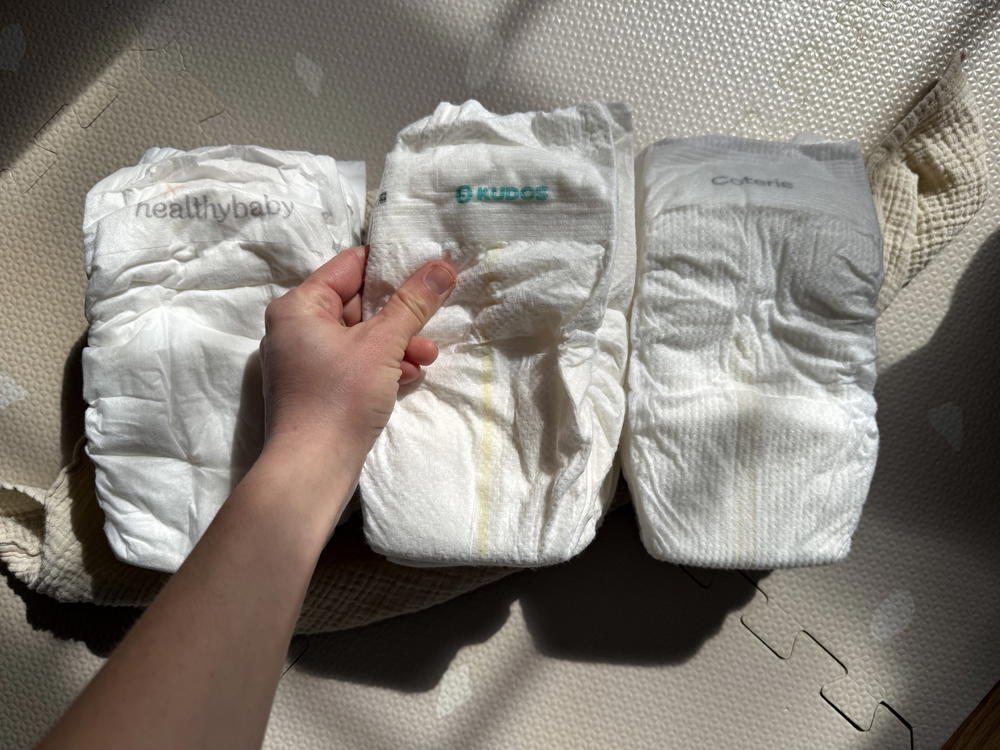
I compare diaper materials and ingredient claims across brands, including what touches a baby’s skin and what I check beyond a non-toxic label.
Some links in this article may earn us a commission if you buy through them. As an Amazon Associate I earn from qualifying purchases. Read our privacy policy and learn more about us.
Table of contents
- My top 5 picks for non-toxic baby diapers
- My note to parents reading this list
- Kudos Diapers
- DYPER
- Coterie
- Healthy Baby
- EcoOriginals
- Parasol
- Terra Diapers
- Rascal + Friends Premium Diapers
- Pura Diapers
- Pampers Pure
- Diapers that didn’t make it on my list
- Glossary: Diaper ingredient terminology to know
- Conclusion: Best non-toxic diapers
Non-toxic diapers for babies, and the best ones at that, are a loaded topic. It’s because every parent has a different definition of what “Toxic” means.
My approach: I look past the label to the top sheet that touches a baby’s skin, the other materials a brand discloses and the practical performance I have seen from diapers I’ve used. “Non-toxic” by itself does not tell you how a diaper will fit or whether it will prevent irritation. The brand sections below mix my firsthand observations with material information I researched; where I have not used a brand, treat that section as a description of its stated features, not a wear test. If your main concern is a particular skin reaction, my sensitive-skin diaper guide addresses that decision more directly.
You’d think that all diapers are non-toxic. They’re for babies, right? But after my extensive research on the topic, as well as reading labels and ingredient lists, I have a lot to say.
In this list, I’m picking apart the best “non-toxic” diaper brands to consider for your baby, if you’re a parent like me who is concerned about the garble and long words that are part of the diaper industry.
I hope this list helps you compare the materials and claims behind the choices that follow. I can’t determine from a product label alone which diaper will be safest or most comfortable for your baby.
My top 5 picks for non-toxic baby diapers
My note to parents reading this list
What I gathered from making this list (as well as my first-hand experience in diapering my baby and toddler since being newborns) is that every parent has a different perception of “non-toxic.”
Toxic means something that is dangerous or harmful. Are diapers toxic? Well, you shouldn’t eat them, and neither should your baby. But chances are, a diaper is going on their body in order to keep pee and poop inside all day long until they can go to the potty.
So, toxic: how toxic should “toxic” be? Yikes, what a tall ask. For the purposes of this article, we’re assuming that no one is eating diapers. Therefore, toxic is going to mean clean ingredients as well as plant-based ones (where applicable), and references to composting and sustainability if it applies.
You’ll see that I wrote this list for someone who’s either new to diapers or seasoned at diapers and wants to learn more. If you have any specific questions, I will always suggest reaching out to these brands directly about their diapers and the ingredient lists.
At the end of this article, I’m providing a helpful glossary that will pick apart some of the common diaper ingredients in plain English.
Kudos Diapers
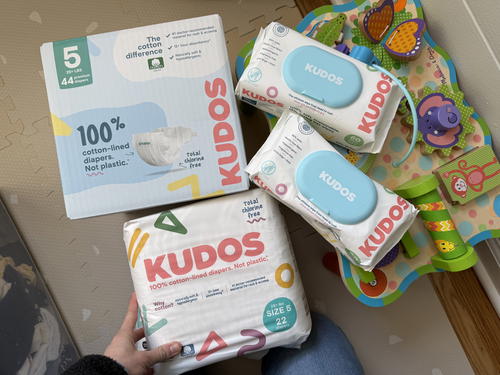
Kudos is my #1 choice for a non-toxic diaper. You probably read this in my article on if Kudos diapers are worth the hype.
We’ve had great experiences with the brand, and what’s more is that Kudos is a “young” brand: it hasn’t been around for decades like Huggies and Pampers (which are not on the list of non-toxic diapers, by the way. Makes ya wonder). A real mom developed Kudos and you may have even seen the Shark Tank episode where she pitched Kudos to the Sharks.
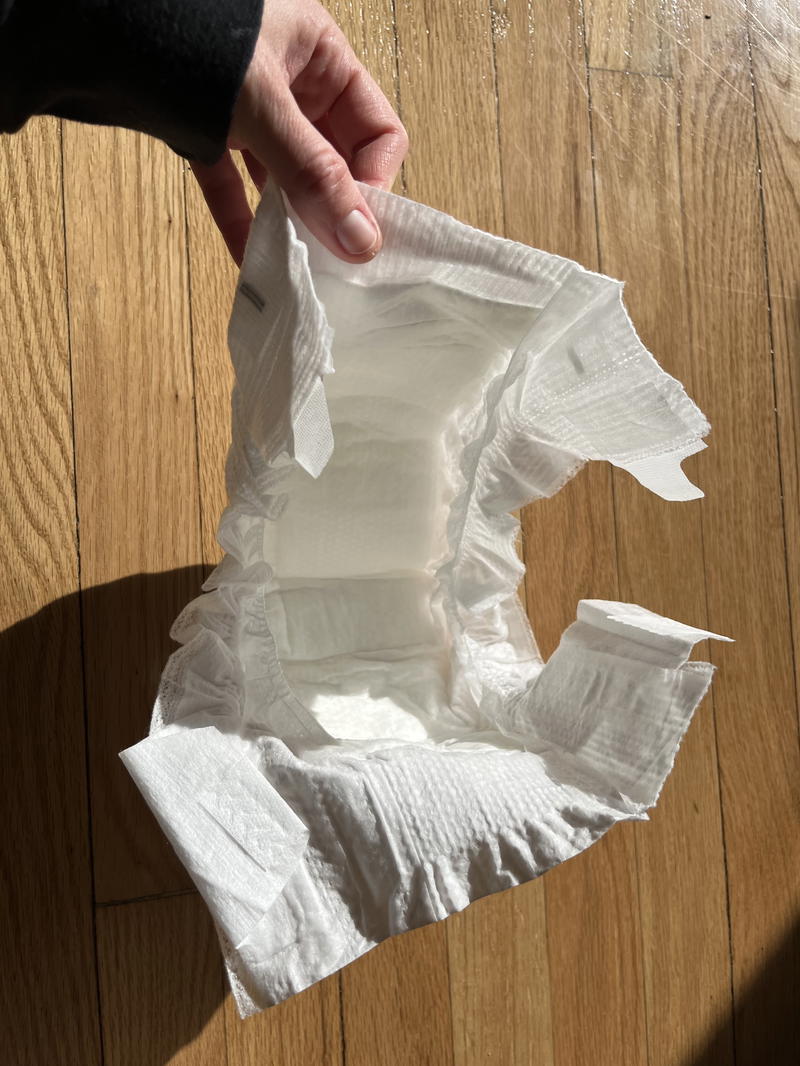
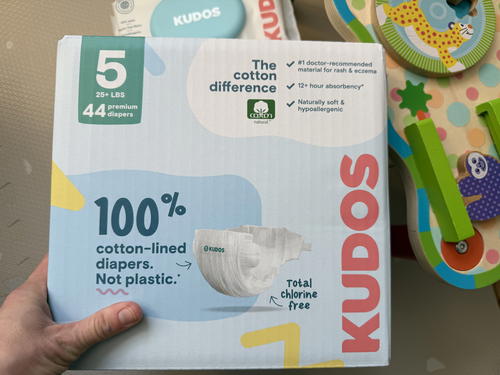
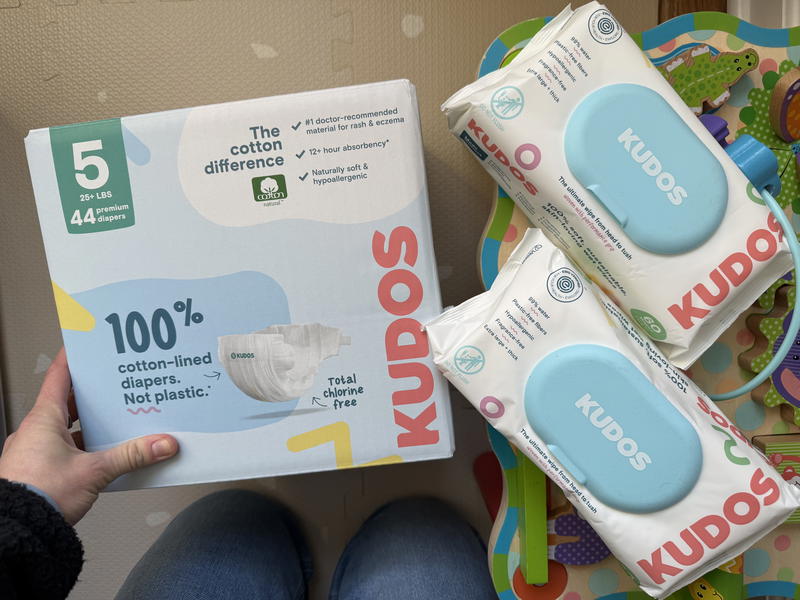
What interested me most about Kudos is its cotton top sheet: the layer that touches a baby’s skin. That is a more precise feature to compare than a blanket “non-toxic” label. I have not checked every diaper sold, so I would not treat a claim that it is the only cotton-lined option as a complete market survey.
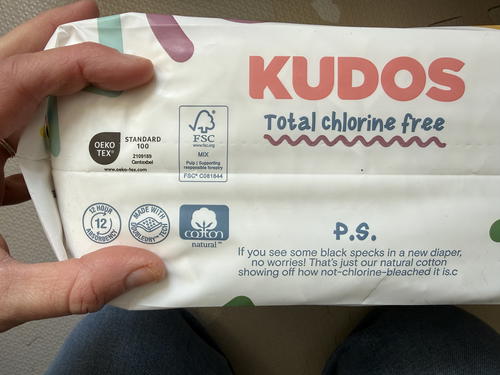
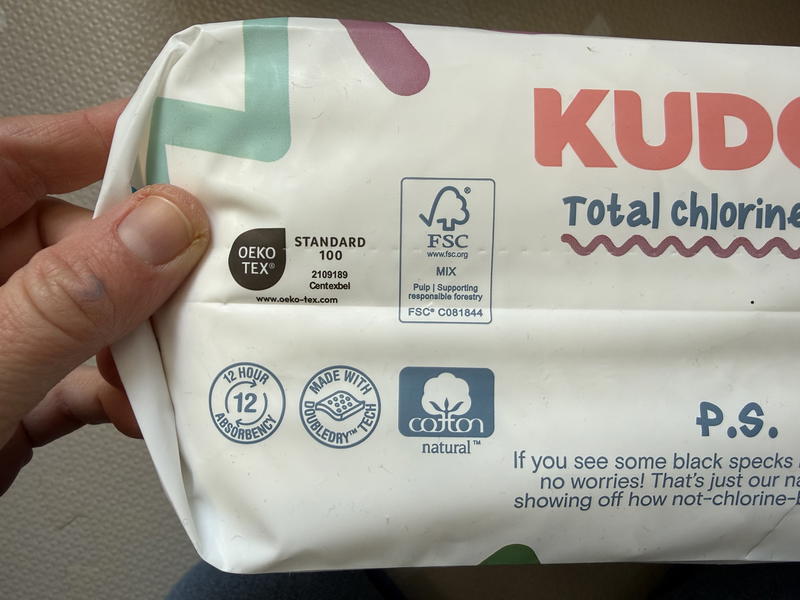
Here are the material and certification claims I considered alongside my experience using Kudos:
- Kudos describes its top sheet as U.S.-sourced cotton; check its current material disclosure for the exact construction and processing.
- Kudos are OEKO-TEX STANDARD 100 certified (free of 1000+ harmful elements).
- Totally Chlorine Free (TCF) certified.
- Kudos is highly transparent about every material that goes into their baby diaper, with this full ingredient list available to parents.
I liked using Kudos diapers, and the material disclosure helped me compare them with other brands. We also use the Kudos Wipes; check the current ingredients if a particular material matters to your family.
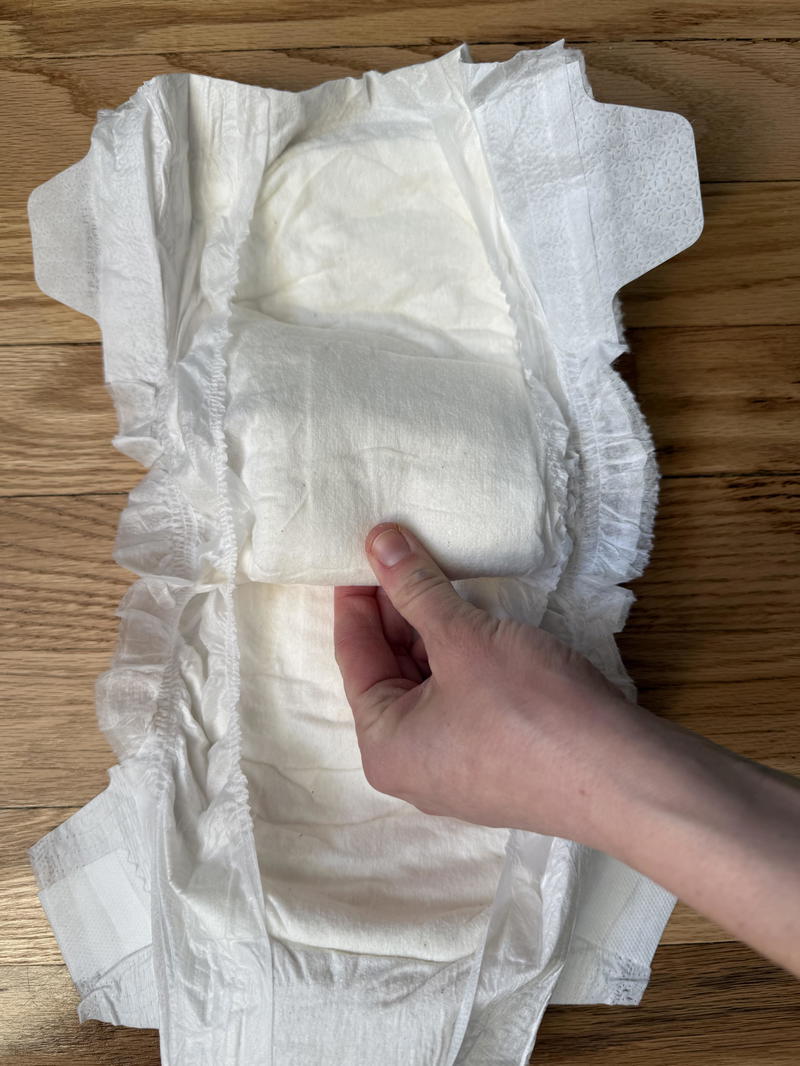
Get Kudos diapers here and subscribe monthly for the best deal.
Don’t forget to use our exclusive KUDOS discount codeHALFHALFHOME for 10% off at checkout!
DYPER
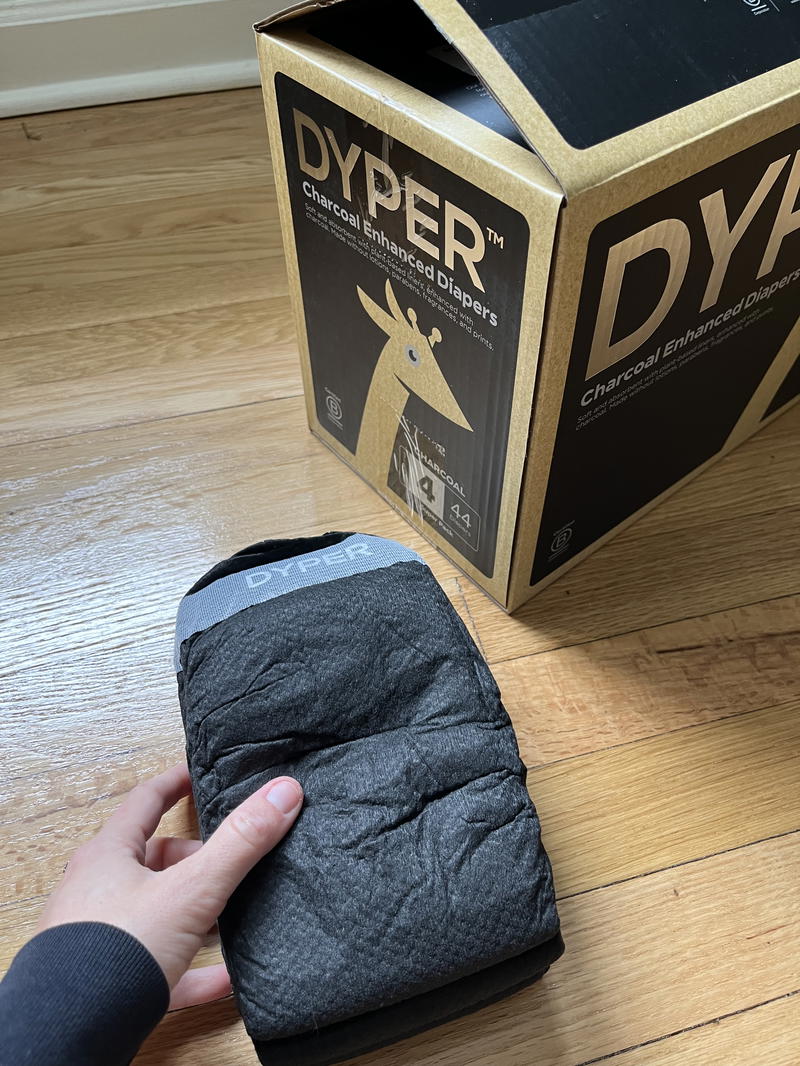
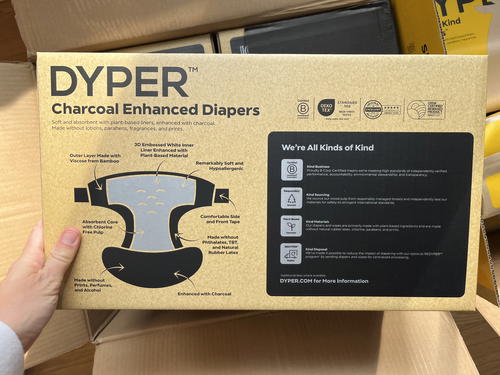
We tried DYPER, another brand that emphasizes plant-based materials and a separate disposal program. Those are claims to check against the current product and the services available where you live. My DYPER diaper review has the detail on our product experience.
Compostability does not establish that a diaper is safe for every baby’s skin, or that it can go into a home compost bin. See DYPER’s material diagram for its current description of the liner and other components.
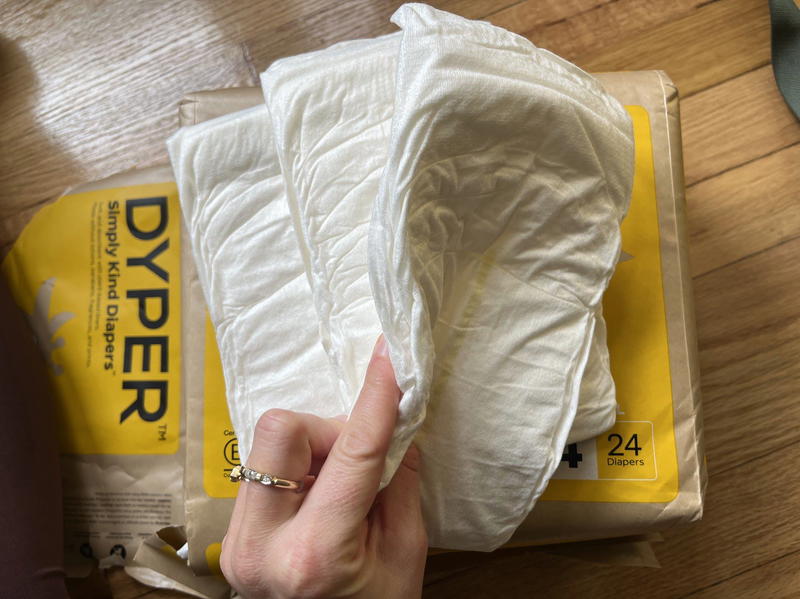
DYPER has described a separate REDYPER collection service for used diapers. Check whether it currently serves your address and which products it accepts; its availability is not evidence about how a diaper will feel or perform on your baby.
Here’s the summary of what I think matters:
- Only natural fibers touch your baby’s skin in the top-sheet liner (bamboo viscose)
- DYPER is committed to reducing plastic waste and contain 2X the plant-based materials of other “regular” diapers.
- Like Kudos, they are OEKO-TEX Standard 100 certified, confirming the absence of 1000+ harmful chemicals.
- DYPER describes bamboo-derived material in the top sheet; disposal depends on the current collection program and local rules.
Check out DYPER in sizes NB-6.
Coterie
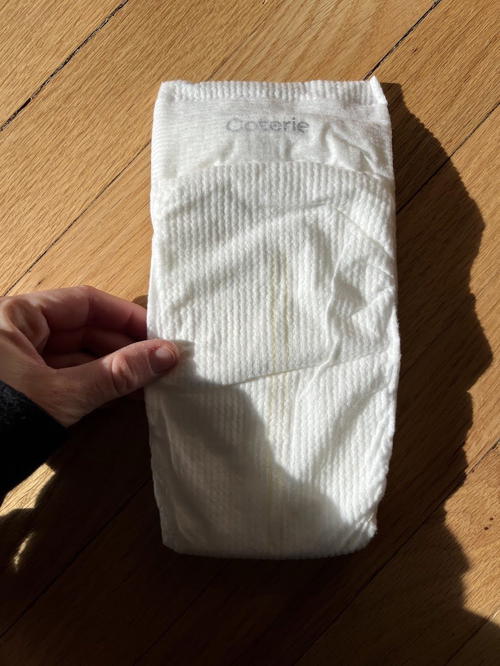
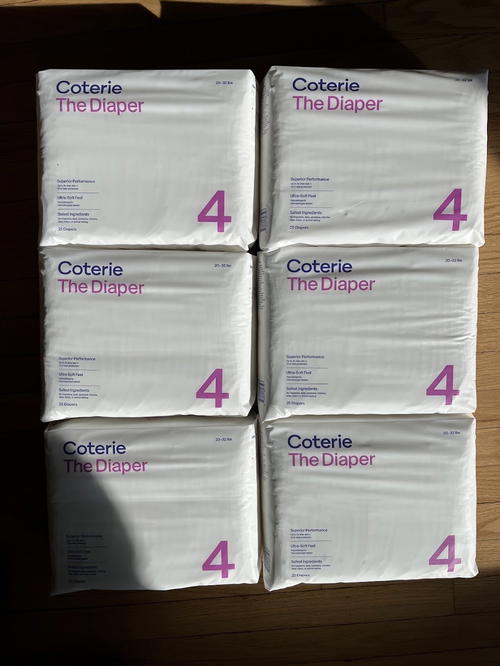
Of course you’ve heard of Coterie! Do you want to know if this famous (and very absorbent) brand is non-toxic, though? Let’s go through it, because Coterie makes a claim to “clean ingredients” and “25% plant-based materials.” If you want to dive in, head to my honest Coterie diaper review.
Yes, Coterie earns a spot on this non-toxic diaper list for a few reasons. First, Coterie is also OEKO TEX certified (and hold them to this: their certification # is clearly available on their website, and it is “#25.HUS.21538 Hohenstein”). This means the product is made without 1000 harmful chemicals.
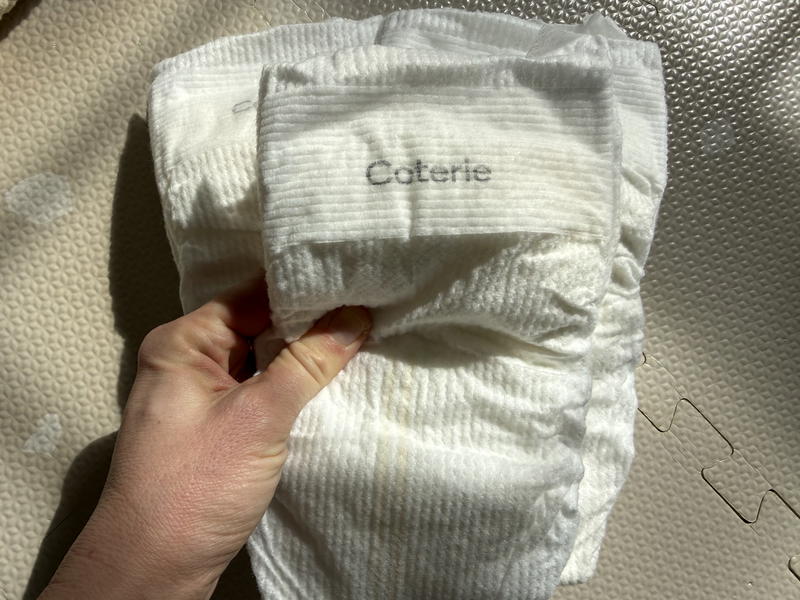
Here’s the summary to take home about Coterie diapers and the non-toxic ingredients:
- “25% plant-based,” and made from TCF (Totally Chlorine Free) wood pulp
- “Apparel-grade materials” which in my rephrasing means yes, this diaper is as soft as a T-shirt (for real)
- NO fragrances nor lotions, specifically, “made without fragrance, parabens, latex, lotion, chlorine bleaching, rubber, alcohol, phthalates, VOCs, and optical brighteners.”
Try Coterie here (and I recommend the auto-renew subscription that you can manage even via text message!). There’s also the Coterie non-toxic baby skincare line to peruse.
Healthy Baby
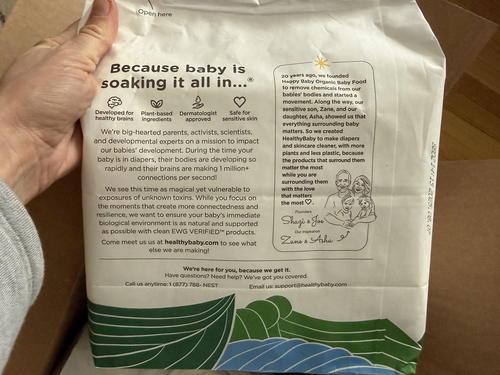
I like that Healthy Baby speaks up very immediately about the non-toxic makeup of the brand’s diapers. The first claim about ingredients is that they are non-toxic for baby’s body and brain development. Very important stuff!
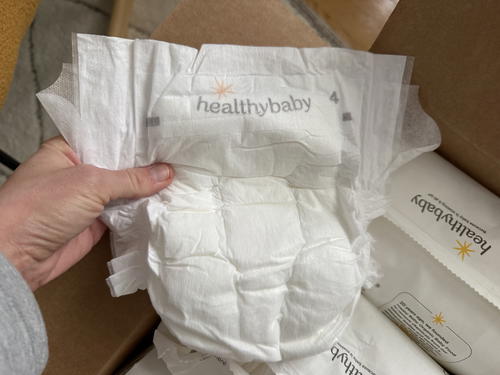
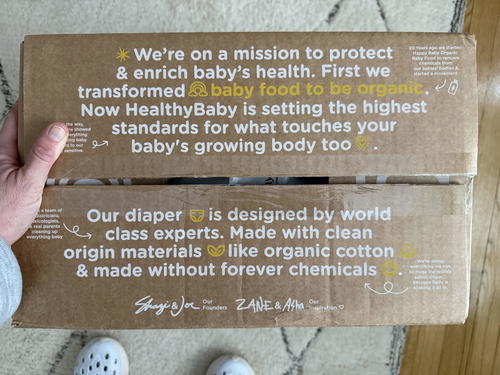
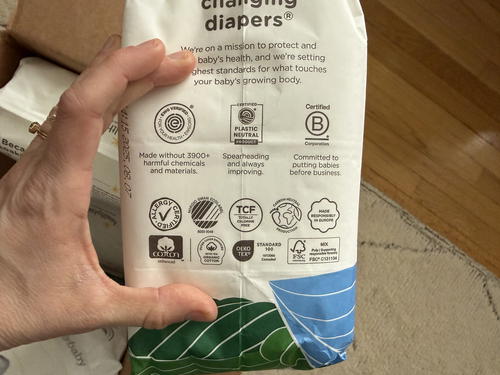
In the meat of it, Healthy Baby is very proud, and forward, about a new standard of transparency in the diaper industry. To that end, you’ll see right on the website that there’s a carousel of certifications (OEKO TEX, TCF, EWG Verified, B Corp). Actually, the B Corp bit is one of the things that particularly speaks to me because I prioritize B Corp brands in my consumption.
A summary is here, because for Healthy Baby, the list of what’s NOT in this diaper is pretty long:
- Made WITH “Non-toxic, plant-derived materials,” organic cotton and FSC certified pulp
- Made WITHOUT 3,900+ banned ingredients under the EWG Verified certification. This includes NO parabens, phthalates, fragrances, optical brighteners, chlorine, latex or lotions
- It doesn’t even have a wet/dry indicator because those yellow-to-blue indicators contain chemicals.
The website has a highly transparent ingredient list for parents to see.
EcoOriginals
EcoOriginals is one of the more impressive plant-based and non-toxic diapers in this list. These Australian diapers (which are widely available in the US on Amazon) earn a spot in this list because they’re not like the others.
The claim from EcoOriginals is “100% plant-based layers” (not a 100% plant-based diaper, but most are not)*. They have a commitment to plastic neutrality (this is great, in my opinion!) and brand themselves as “chemical-free.”
Specifically, the breakdown is this:
- EcoOriginals uses pure cotton in the diaper back-sheet, so the diaper waistband and leg cuffs are cotton (Keep in mind the only cotton TOP-sheet is from Kudos, above)
- Certified FSC® wood pulp in the absorbent core
- The 100% compostable PLA layer is made of a corn starch film
- The brand describes Plantcell as plant-based layers; check its current material disclosure rather than assuming this means the whole diaper is plant-based or free of every possible irritant.
I would check EcoOriginals’ current product information for any progress on its previously stated biodegradability goal; a goal is not a property of the diaper listed here.
Parasol
Is Parasol a good non-toxic diaper for babies? I started digging and the first good news is that their website makes ingredients loud and clear for nervous parents who care about diaper ingredients.
Let’s get straight to it:
- Uses Totally Chlorine Free (TCF) Wood Pulp in diaper core
- Use of non-toxic adhesives (Styrene-Butadiene Copolymer) to secure the diaper core
- NO chlorine, petroleum oils, optical brighteners, VOC-emitting adhesives or formaldehyde releasers
- NO fragrances, lotions, dyes, parabens, phthalates, latex or heavy metals
- OEKO-TEX® STANDARD 100 certified as well as “Target Clean badge for safer ingredients”
Parasol makes a very effective non-toxic diaper, with a bunch of sustainability promises to boot.
Terra Diapers
With Terra’s clean, modern and appealing marketing, I was drawn in to learn about this diaper that has the tagline, “Eco. Natural. Premium.” This company is among the ones that makes claims to plant-based diapers (85%, specifically) that break down completely and even “return to nature.”
The emphasis from Terra Diapers is diapering the natural way. And I’m hooked.
In these diapers, the glue is made from rice, waterproofing comes from cornstarch and there’s wood pulp, along with bamboo fiber, and sugarcane coating.
Here’s a quick read of my findings:
- Only naturally processed materials.
- Compostability is a brand claim to verify for the exact product and disposal method; do not assume a used diaper belongs in home compost or a standard recycling bin.
- “Topsheet made from food-grade material” (website does not say what kind of material specifically, though)
- Layers made from corn starch and leg cuffs made from bamboo fiber.
- A lot of focus across all Terra products on the “return-ability” to the Earth, with no toxins. Lots of information available on their sustainability practices.
To top off the non-toxic and chemical-free claims, get this: their packaging is paper-based and recyclable—even plastic-free. They even repurpose and reuse “cutoffs” (extra bits from manufacturing) and donate them to use in cleaning pads or to schools.
Terra’s diapers really impress me for these reasons and details, and I think they will impress you as well.
Rascal + Friends Premium Diapers
My friend from our baby group used Rascal diapers for her very tall toddler, and she liked them because they “run tall.” So, I started looking into this brand. What makes this “premium diaper” (as it is marketed) so non-toxic?
In short, Rascal + Friends is a ground-breaking diaper for its design in a few ways (a unique deep pocket for leak protection, a “fast-dry layer,” technology that “bonds” the materials in it with hot air for supreme softness). What about toxicity concerns?
The good news is that yes, Rascal diapers are:
- made with “0% lotions, latex and fragrance.”
- Also OEKO-TEX Standard 100 certified (a big deal)
- even certified Cruelty-Free and Vegan.
Rascals has garnered many #1 best diaper recommendations across the Internet. While surely non-toxic, it seems that most of their advertising push is in the diaper design and wetness absorption as well as “no-mess.”
Pura Diapers
I’m lucky to have gotten a lot of stuff for free for my baby and one of those things was Pura Diapers, on our Buy Nothing community group. I found that they ran REALLY short and wide, so they were not a great fit (literally) for us, but consider the following.
This British brand is also a certified B Corp, and that is what caught my eye first. “Organic cotton comfort” also had me at “cotton,” so I had to read more about how this ingredient was among the non-toxic ones for babies’ safety.
Pura makes yet another claim to “plant-based materials” as the components that touch a baby’s skin. As I dove deeper, I was glad to find a shockingly simple list of ingredients right on the website:
“Plant-based polyethylene, organic cotton, polyethylene, polypropylene, polyester, polyurethane elastic, wood pulp, super absorbent polymer, adhesive, pigments.”
Further, here’s what I’d tell you if I had to sum up the non-toxic claims from Pura:
- Cut plastic ingredients wherever possible
- Outer cover is made from cotton (*remember: Kudos is the only brand that uses a cotton inside liner, the topsheet)
- TCF wood pulp in the super absorbent core
- Very transparent about ingredients, as they are listed not once, but even twice on the website in two spots (under “Ingredients” and in “Diaper Ingredients” after the infographic).
Try Pura at Amazon.
Pampers Pure
I was actually surprised to find out more about Pampers Pure, which lots of people think is just a fancier version of Pampers (I am one of them). Through some digging, I found that Pampers Pure is indeed the “level up” from “regular Pampers,” and features more non-toxic ingredients.
Maybe shockingly, you will find that Pampers Pure uses a cotton ingredient. It’s not in the top-sheet or back-sheet, but rather, in the outer cover. Remember, as per above, this still makes Kudos the only cotton-lined diaper (the top-sheet is the element that touches the baby’s skin).
It’s just interesting to me that Pampers debuted a very clearly “less non-toxic” variant of their diapers, and left the original kind of untouched. Anyway, that’s just an opinion of mine.
Diapers that didn’t make it on my list
I have nothing to lose here by telling you about diapers that have ingredients a bit more on the less “non-toxic” side. They’re just a bit “less non-toxic” than all the good choices I list above, which are excellent for the reasons I outlined.
To get right to the point, here are a few brands that I would NOT classify as “non-toxic,” with my reasoning.
Pampers
Pampers, undoubtedly one of the 2 most famous diaper brands that conquers the market, helpfully outlines their ingredients on their website. Pampers typically does not come up if you’d search for non-toxic diapers, as there are so many other brands that are out-doing them on that front.
Pampers claims on their website that their ingredients will never include “elemental chlorine, latex, alcohol (ethanol/isopropyl), BPA, parabens, phenol, lead or mercury inks,” but that should go without saying, so it’s not so impressive.
Huggies (Little Movers)
Huggies tends to make more claims to absorbency and baby’s movement (the stretchy fit) than to non-toxic materials (as I am seeing it). They do say “no harsh ingredients,” and note they are fragrance-free with no “phthalates, parabens, lotions, elemental chlorine and natural rubber latex.”
A full outline is available on the website.
Luvs
I dug into what Luvs uses in their diapers. The ingredients for Luvs are found at SmartLabel. They’re free of parabens and latex, but not many other ingredient safety claims are made. The website points out that the gel you may find is “non-toxic and will not harm your baby.” Funny enough, you can read what I say about Luvs in my list of the best and worst diapers.
Amazon Brand Mama Bear
I did locate a full list of ingredients on the Amazon listing for these diapers. They are indeed OEKO-TEX STANDARD 100 certified, and made with “safer chemicals” (their words, not mine). There are no specific claims in the Amazon diaper ingredients that would make them one of the more impressive non-toxic diapers—just average in the diaper world.
Cuties
They’re free of latex, bleaching, lotions, fragrance, oils and dyes, but they make it hard to find a transparent ingredient list on their website. I was only able to locate the full ingredients in their wipes. I found an abbreviated list of ingredients in their FAQ. Hmmmm.
Glossary: Diaper ingredient terminology to know
I’m going to tell you plainly what a lot of the long words from diaper ingredient lists mean! Funny enough, they all start with “P.” And P is for plastic.
- Polyethylene: the most common basic plastic material in the world. It is basically a plastic you’ll find in packaging.
- Polypropylene: a lightweight plastic. You’ll find it in food containers and other types of containers because it withstands heat.
- Polyurethane: a synthetic (manufactured) material used for coating. It might release toxic fumes during application.
- Polyester: A synthetic (manufactured) material for fabric. You know it from so many types of clothes. It’s basically considered a type of plastic that does not biodegrade.
- Polymer: This is a chemical term that means chains of molecules, but in the diaper industry, it’ll refer to plastic materials.
- Phthalates: synthetic chemicals that aid with flexibility in materials
- Parabens: chemical compounds that help to preserve food and makeup. A lot of baby products will say that they do not contain parabens because of the irritation they can cause on skin.
Conclusion: Best non-toxic diapers
Wow, did you read this whole article? I hope you learned a lot, because I definitely have, as a parent of a baby and a toddler, and as a parent who is concerned about toxic materials in diapers.
What stood out to me about Kudos was its cotton top sheet, the layer that touches a baby’s skin. I liked using it, but a top-sheet material alone cannot settle every safety or fit question.
Other brands in this list describe plant-derived or synthetic top sheets, and some use cotton in other parts of a diaper. Compare the current material disclosures for the exact products you are considering; “plant-based” and “synthetic” do not, by themselves, tell you whether a diaper will irritate your child.
If a cotton top sheet is a priority for you, Kudos diapers are one option to investigate. If your child has a persistent rash, seek guidance from their clinician instead of relying on a material claim alone.
Don’t forget to use our exclusive KUDOS discount codeHALFHALFHOME for 10% off at checkout!
Thank you to Kudos for sponsoring this article; while Kudos has generously sponsored this content, all opinions, as well as personal experiences, are my own.